Five Reasons You Should Buy That Cool Notebook
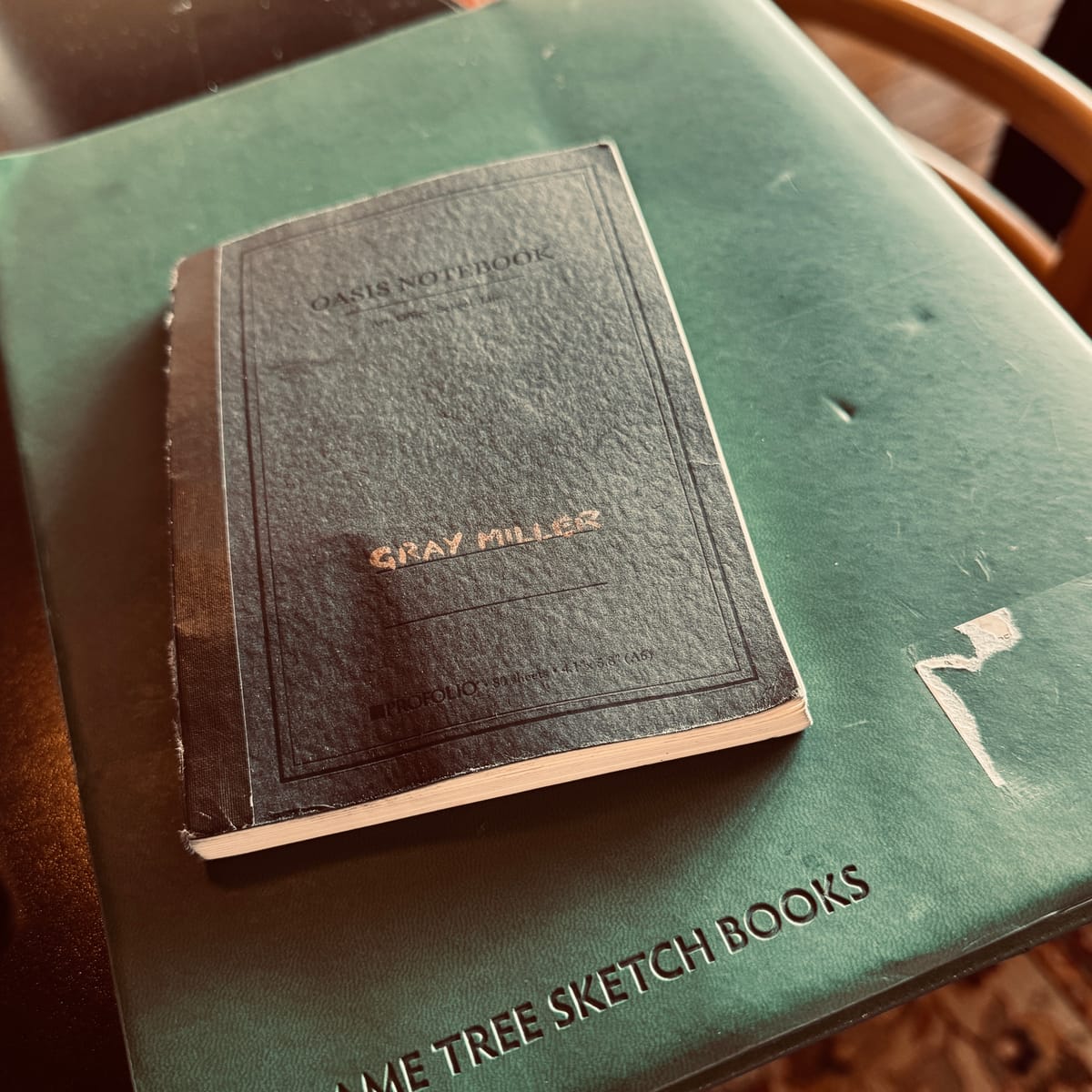
In a perfect world, you wouldn’t need an excuse. The poet Toi Derricotte’s told us already: “joy is an act of resistance” and Mari Kondo said that things that spark joy are worth keeping, so if picking up that Oasis notebook from ProFolio makes that dopamine flow, more power to ya!
Your hall pass to splurge without guilt at the bookstore
If that headline brought you into this article, welcome! You are most likely one of us. One of those people who will be stopped in their tracks at the craft market, bookstore, or even Trader Joe’s by the sight of a Beautiful Cover. Sometimes it’s with something witty on the outside (“DECOMPOSITION BOOK” or “<this.will.fix.everything.>” are a couple of my favorites). Sometimes it’s just beautiful craftsmanship or clever marketing — Archer & Olive or Dapper Notes just feel so good in my hands, and I’ve been seduced by the clever marketing and gosh-danged usefulness of a Field Notes release more than once.
I try to keep ADHDOpen.space free to read, but if you'd like to support the time I spend here, feel free to subscribe! There are intermittent rewards for subscribing, and you'll be making the world a little better by keeping this kind of content accessible for everyone.
Which means if I make a stack of filled notebooks it will be significantly shorter than the stack of semi-filled notebooks, and embarrassingly close to the stack of empty notebooks I own. Add to that the hobby I have of making notebooks of various kinds, and you might think: Gray, you don’t need another notebook.
This is true, in the empirical sense. But if we based all our purchases only on “need”, there would be no commerce, much less capitalism. Think of the binders!
In a perfect world, you wouldn’t need an excuse. The poet Toi Derricotte’s told us already: “joy is an act of resistance” and Mari Kondo said that things that spark joy are worth keeping, so if picking up that Oasis notebook from ProFolio makes that dopamine flow, more power to ya! You don’t need this article, but it’s been nice seeing you.
But we live in a world where we it often feels we have to justify our pleasures even more than our existence, and so for those looking for a justification: I got you.
A Commonplace Book Makes You Smarter
You know when you read something or hear something and you think “Oh, hey, that was pretty interesting…” Or funny, or smart, or just something that seemed worth remembering?
That’s what a “commonplace book” is for. Instead of bookmarking it in some electronic archive you never visit, or forwarding it or even screenshotting (screenshooting?) it, write it down in your commonplace book.
This will do two things: one, whatever the quote was, it will lodge more firmly in your memory because it will be tied to the muscle memory of your hand, the feeling of the pen, the scratch of the nib on paper.
Two, it will give you a talisman against doomscrolling — instead of pulling out your phone, you pull out your commonplace book, open to a random section, and smile, saying “oh, yeah…I remember reading that.”
A Journal Makes You Calmer
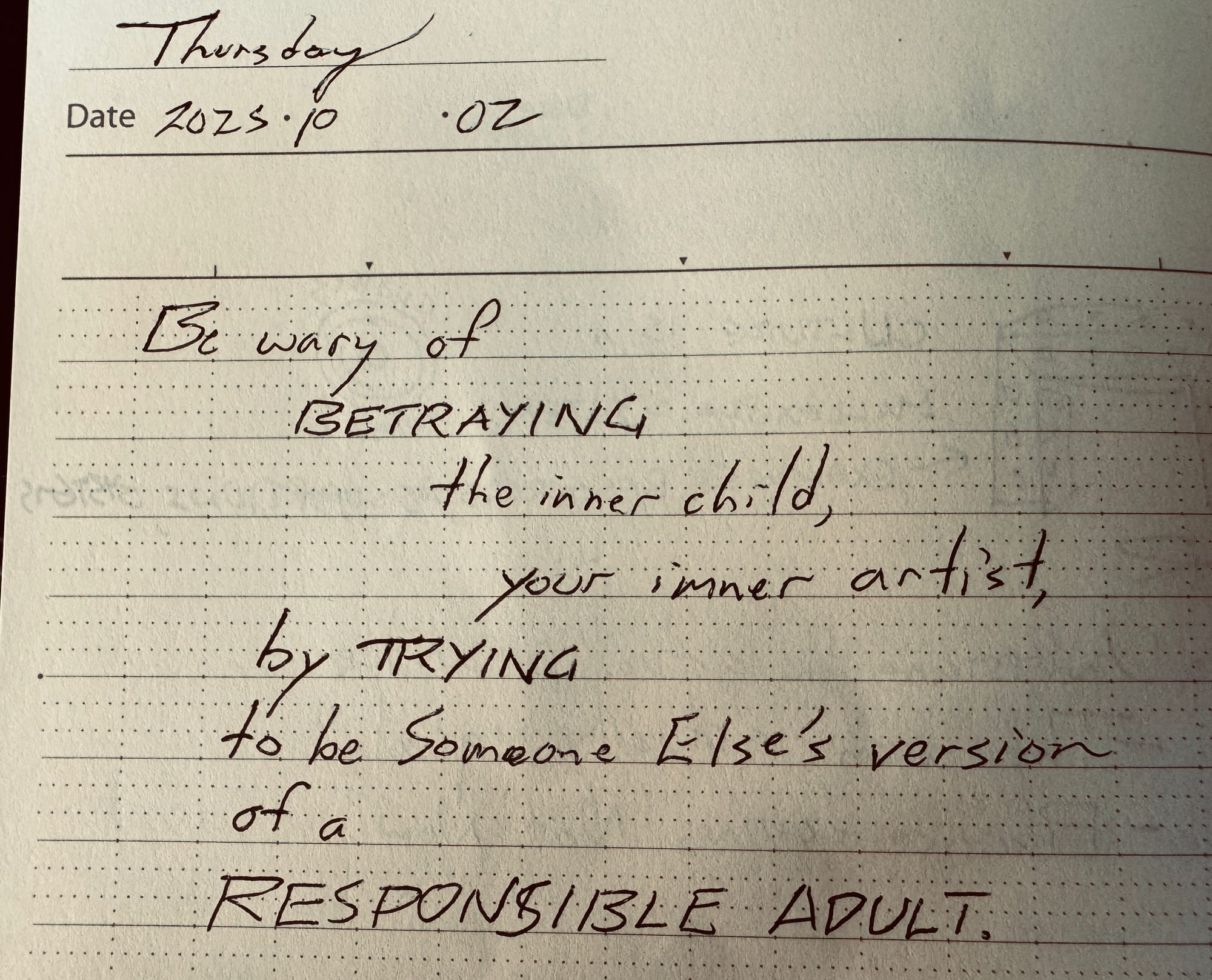
There are probably as many studies about the benefits of journaling as there are books, articles, videos, and podcasts about the studies that show the benefits of journaling. I’ve certainly done my share — in fact, I’m about to launch a workshop that includes a journaling challenge.
I’m not saying that journaling is always fun. It’s not. It can be cathartic, it can be creative, it can be any number of things, but there’s one thing that tends to come out in your journal.
The truth.
That’s why it can be uncomfortable, because when you journal, you’re having a conversation with yourself, and that makes your bullshit detector even more sensitive than normal.
It also helps you notice when your self-talk isn’t really yourself — when you write it down, and you think “huh, that sounds like Mom…” or just realizing that you are talking to or about yourself in a way that you would never do to a friend.
I think that’s the true secret of a journal. You are hanging out with yourself, and that’s how you start to become friends with yourself.
If that sounds silly to you — if you already like yourself completely the way you are — good on you! I’m envious. A lot of the rest of us need to remind ourselves through writing that we are, in fact, pretty nifty.
And while it’s probably the subject of an entire other article, let me just say it here: there’s no wrong way to journal. You don’t have to write affirmations. You don’t have to tell the truth. You don’t have to follow prompts, or guidelines, or anything else — you aren’t writing for any audience. Nobody, not even yourself, has to read what you write. You could even enjoy the oxymoron of “burn after writing”. Because the point of journaling isn’t what you write.
It’s that you write.
A BuJo Makes You Cooler
“What’s a BuJo?” you say?
“It's part organization, part soul-searching, part dream-weaving.” ― Ryder Carroll, The Bullet Journal Method
“BuJo” is the cooler-sounding name for a Bullet Journal, as popularized by Ryder Carroll and thousands of other people who talk about it and write about it and, because it’s the internet, argue about the “right” way to do it.
Whatever way you do it, though, if you’re writing in your notebook and someone asks “what’s that?”, when you say “A bullet journal” you’ll either get a look of curiosity because they’ve never heard of it or a look of respect because they have and know how much it can help.
Look, it’s been very much commercialized, but the system itself was basically Ryder figuring out that making lists helped his traumatic brain injury. That kind of organic, almost-universally-useful system doesn’t come around all the time.
And while you can go on their YouTube channel and buy the special edition Leuchturmm notebooks and pens and such, what it comes down to is
- Just
- Use
- Bullet
- Points
- To
- Make
- A
- List.
You may want to date them, you may want to use special markings to show which things are to dos and which are done and which are meetings and which are happy memories. You may want a list of numbers that’s a calendar or a list of spices at Penzeys you want to eventually buy.
A BuJo is just making lists to help sort the chaos of existence. And sure, you could just say to someone “I’m making a list” but I’m convinced that “This is my BuJo” makes you sound cooler.
“Checklists seem lowly and simplistic, but they help fill in for the gaps in our brains and between our brains.”
-- Atul Gawande, The Checklist Manifesto
An Urban Sketchbook Makes You Friendlier
Of all the notebooks I’m listing here, this is the one I have the least familiarity with. I have a dream of being one of those people sitting at the farmers market, drawing the busker playing the accordion next to the dog across from the organic broccoli stand…or using my watercolors to catch the exact right shade as the fading sunlight slants across the ripples of Venetian canals and hits the terrazzo.
But the reality is, I don’t even know what a terrazzo is. I just know that Urban Sketching is a thing, and honestly, would be a thing I could do if I brought a sketchbook with me and just did it.
And supposedly it is good for the brain. There’s a whole lot of internet opinions about that.
”At its core, urban sketching is an invitation to slow down. In a world of fleeting moments and hurried routines, taking the time to observe and translate what you see onto paper allows you to engage more deeply with your surroundings.” — Sharon, Quick Sketch Society
I can already hear the chorus of “Yeah, but I can’t draw…” to which I say fooey. Double fooey, even. I can say that because I used to say it too.
There may be a very small population for whom that is literally true. But for the vast majority of us — especially if you’re still reading this blog — the reality is that we do not draw. Usually for a variety of reasons, including but not limited to:
- We believe there are more important things to do, and we can’t “waste time”
- Sketching is something artists do, not me.
- What I draw won’t be any good.
- It’s easier to just pull out my phone and doomscroll (isn’t it funny that this is literally the opposite of the first excuse, and yet it can be said in the same breath?)
All of which is a bunch of perfectionist no-true-Scotsman-hustle-culture bullshit.
Hypothetical question: let’s pretend you are watching a child (could be yours, could be a favor for a friend). They spend a half-hour with their crayons and some scrap paper, and rush over to you: Look what I made!
Do you say “Why were you wasting your time scribbling?” Or do you say “Oh, honey, don’t you know, drawing is for artists, not you.” Or maybe “Hmm, that’s not really very good. Maybe you should play something else?”
Or if they say “Can I color?” do you say “No, I think you should watch this iPad YouTube channel instead.”
If you wouldn’t say it to your friends’ kid, why would you say it to yourself?
Especially if it’s a justification for buying/making/carrying another cool notebook?
A Sketchnotebook Makes You Wiser
If the previous section didn’t cure the But I don’t draw bug, this section is for you. Sketchnoting (or visual recording or whatever else you’d like to call it) came into great popularity and mainstream attention thanks to Mike Rohde who wrote the Sketchnote Handbook (and, later, Workbook). And right there in the main section is the clarion call of the sketchnoter:
Ideas, not art.
Here’s the thing: our brains work better with symbols than with letters for a lot of things (otherwise, why would there be icons on your phone rather than a tiny list of apps?). And for most things, the nuances and connections are more complex than can be expressed in linear notes.
But we can’t onlyuse images (most of the time). There are aspects of language and typography that make ideas more clear — for example, the H2 sections of this blog post, along with the spacing.
So the first thing about sketchnotes is: unless you’re a professional sketchnoter (and yes, they exist, I’ve been one) your sketchnotes are just for you. They don’t have to be understandable to anyone, they don’t ever have to be part of a powerpoint, they don’t have to be anything other than a way to remind yourself of what happened.
It’s kind of an anti-AI thing — rather than letting AI summarize a meeting, letting you space out, you are incredibly present in the meeting, because you are “synthesizing” the information into quick symbolic language.
As a person with ADHD, I find that sketchnoting is a fantastic way to keep my brain focused on what is happening while at the same time giving me lots of dopamine hits as I draw little shapes and labels and arrows and such.
Here’s an example of the sketchnotes I took at a recent board meeting of the Bodgery Maker Space (the minutes are available online, so I’m not sharing any insider info).
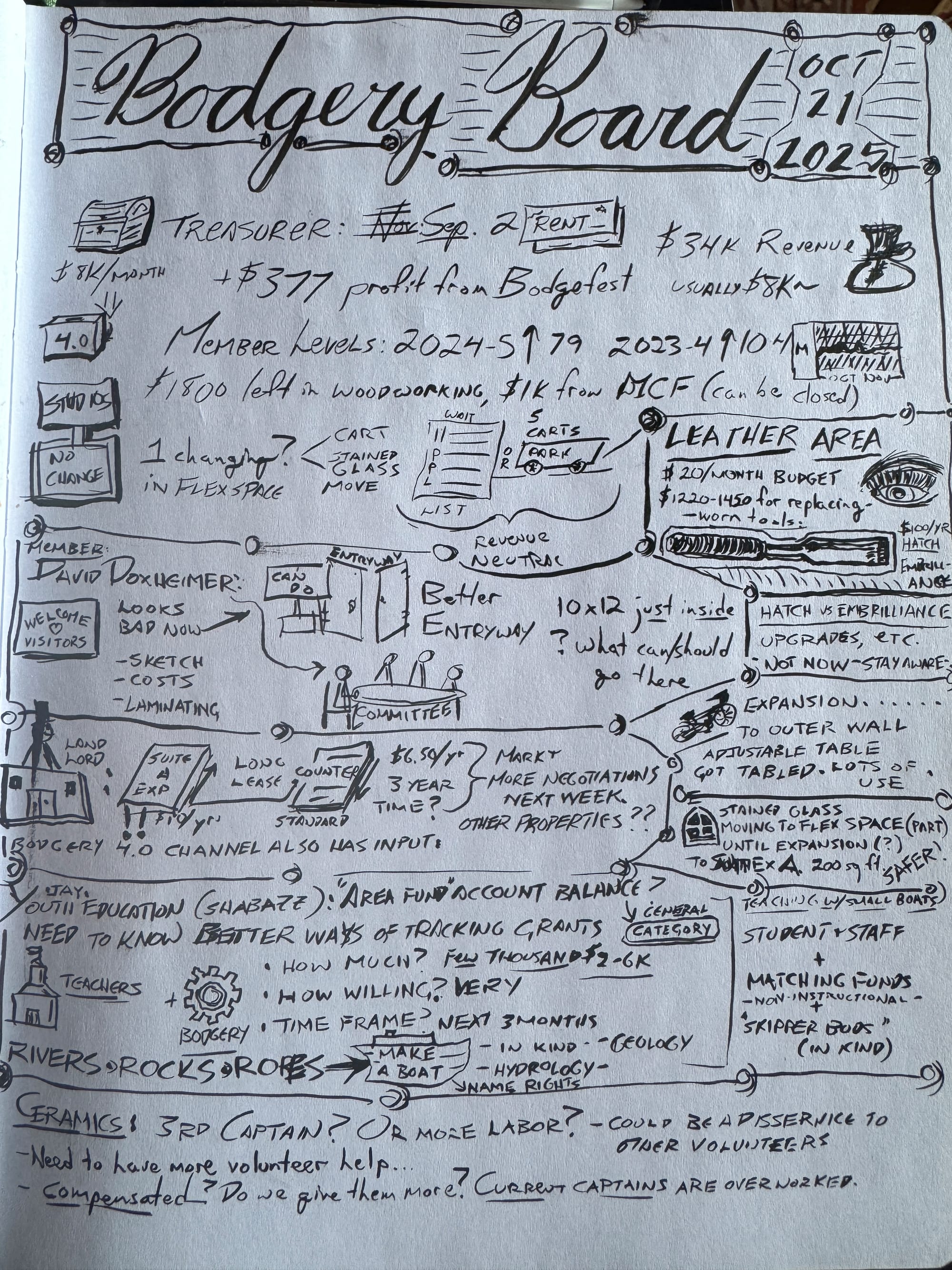
If it looks confusing to you, if you can’t understand it — good! It wasn’t made for you, it was made for me, and I was at the meeting, so it helps me remember.
But even without understanding it — doesn’t it look more fun than an outlined google doc? Which am I more likely to glance at or refer to? Which does a better job showing the things that took up more discussion or less?
And it was done on a nice green sketchbook that I bought years ago, and felt guilty about because I never pulled it out. Now it’s my meeting book, and it makes an impression when I pull it out.
You have permission.
The entire premise of this article is tongue-in-cheek, because you don’t need an excuse to get a new notebook. But that’s not really the problem, is it?
What you might need is permission to use the notebook in the ways it can best benefit you. What you need is the justification of time spent creating and working in the notebook, whether it’s journaling your inner monologue, sketching a coffee cup, or being the weird one at the staff meeting who’s not typing on their laptop.
Or maybe (and this is the real truth) I’m the one who needs the justification and the permission, and I’m just letting you come along with my inner monologue.
If so, thanks for reading — and if this results in some quality time between you and whatever notebook is handy, let me know!
Comments ()